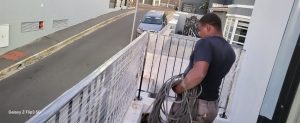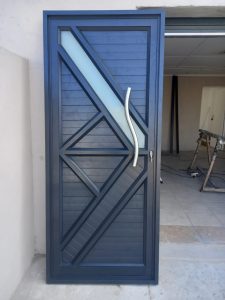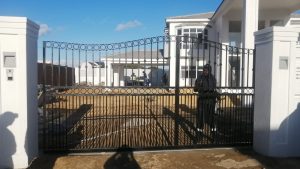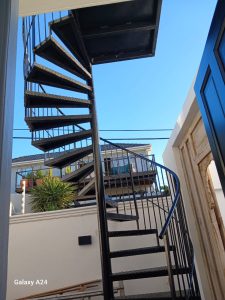
Some welding jobs simply cannot come to a workshop. A driveway gate that has dropped on its hinges, a balustrade coming loose on a second-floor landing, a cracked bracket holding a water tank in place — cutting these free and trailering them across Cape Town costs more in disruption than the weld itself.
That is what on-site welding is for. We bring the machine, the generator and the safety gear to the property and do the work where it stands. This guide covers what genuinely can be welded on site, what still belongs in the workshop, and how to tell which one your job needs before you call.
What On-Site Welding Actually Means
On-site welding — sometimes called mobile welding — means the welder travels to you with portable equipment rather than the steel travelling to a workshop. For most residential and commercial repair work in Cape Town, this is the practical option.
It matters most when the item is structural, fixed in place, or too awkward to move without causing damage. A steel staircase already bolted into a wall is a good example: removing it to fix one cracked joint would mean breaking out fixings, patching plaster and reinstalling, all to reach a weld that takes under an hour in place.
Jobs That Suit On-Site Welding
Gate and fence repairs. Dropped hinges, cracked frames and snapped latches on driveway and pedestrian gates. Gates take a hard life in Cape Town — daily use, wind loading, and salt air on the Atlantic side all work at the welds.
Balustrades and handrails. Loose stanchions, cracked base plates and rails that have pulled away from their fixings. These are almost always fixed in place because the whole point of the repair is restoring a fixing to the structure.
Burglar bars and security gates. Repairs, adjustments and additional bracing on existing installations, where removal would leave a property insecure overnight.
Structural steel repairs. Cracked brackets, corroded base plates, lintels and support frames that form part of a building. Anything carrying load is a poor candidate for removal.
Piping and tank work. Water tanks, stands and pipework already plumbed into a system.
Jobs That Belong in the Workshop
Being straight about this saves everyone a wasted call-out. New builds are usually better made in a workshop, where jigs hold everything square and conditions are controlled. A new gate, a new staircase or a custom frame will come out cleaner and typically cheaper if it is fabricated properly and then installed.
Fine finishing work is the same. Detailed stainless steel that needs a consistent, discolouration-free finish is difficult to achieve on a windy site. Cape Town wind is a genuine variable here, not a technicality — gas shielding on TIG work gets blown away, and the weld quality suffers.
The honest rule: repairs and installations go on site, new fabrication goes in the workshop. Plenty of jobs are a mix of the two — we build the item properly under cover, then come out to fit and weld it into position.
What Affects On-Site Welding Cost
On-site work generally carries a higher hourly rate than workshop time, because it includes travel, portable power and setup. Whether it works out more expensive overall depends on the alternative — if the workshop option means removing, transporting and reinstalling a heavy item, on site is usually the cheaper route.
The main variables are access, material and power. A ground-floor gate is quick. A balustrade on a third-floor balcony with no lift access takes longer to set up than to weld. Stainless steel and aluminium cost more than mild steel in both consumables and time, and cast iron needs careful pre-heating and controlled cooling that cannot be rushed.
For a sense of the underlying rates, see our guide to welding costs in Cape Town. For a fuller comparison of the two approaches, read on-site vs workshop welding.
Getting the Job Done in One Visit
The most common reason an on-site job needs a second visit is a surprise — the damage is worse than it looked, or the material is not what was assumed. Cast iron mistaken for mild steel is a regular one, and it changes the whole method.
A few photos before we come out solve most of this. A wide shot showing access, a close-up of the damage, and a rough idea of the metal lets us arrive with the right process and consumables. If you are unsure what the metal is, say so — that is a normal question, not a problem.
It also helps to know whether there is power on site. We can work off our own supply, but knowing in advance means the right kit comes on the vehicle.
Materials We Weld On Site
We work in mild steel, stainless steel, aluminium and cast iron, and the material drives the method. Mild steel is the most forgiving and covers most gate, fence and structural repairs. Stainless needs cleaner technique and more care to keep its corrosion resistance intact — worth getting right on coastal properties. Aluminium demands different equipment entirely and is unforgiving of contamination. Cast iron is the specialist case: it cracks if heated or cooled too fast, so it is a slow, deliberate repair rather than a quick tack.
If you are weighing up materials for a new job rather than a repair, our comparison of mild steel and stainless steel covers where each one earns its cost.
Frequently Asked Questions
Is on-site welding as strong as workshop welding?
A correctly executed on-site weld is structurally sound. The variables are wind, access and position — a weld made overhead in an awkward corner is harder to execute than the same joint on a bench, which is why setup and shielding matter so much on site.
Do you need power and water at the property?
We can run off our own portable supply, so mains power is not essential. Telling us in advance simply means we arrive with the right equipment rather than discovering it on the day.
Can rusted steel be welded on site or does it need replacing?
It depends how deep the corrosion runs. Surface rust cleans back and welds fine. Where the metal has thinned through its section, welding alone will not hold and the affected piece needs cutting out and replacing — which is still often doable in place.
Related Welding & Fabrication Services in Cape Town
Supar Steel offers a full range of welding, steel and aluminium fabrication services across Cape Town. Explore related guides and services: